

NFTs Demystified: From Beginner to Pro in the World of Non-Fungible Tokens

Key Takeaways
- A non-fungible token is a unique digital asset that proves unalterable in the ownership of particular digital assets.
- NFTs allow artists, content creators, and businesses to commercialize their digital possessions, specifically within the art, music, gaming, and sports domains.
- Blockchain technology ensures the security, trustworthiness, and authenticity of NFTs.
Introduction
NFTs have transformed digital asset ownership by establishing an evolutionary shift within the digital ownership field. Blockchain-based NFTs operate as digital assets, mainly using the Ethereum blockchain to develop unique ownership of specific digital resources.
NFTs integrate unique information into their structure, making them original and immutable assets. Their distinctive characteristics prevent their exchange in the same fashion as Bitcoin and Ethereum proof-of-work (POW) tokens, making them non-interchangeable assets. The emergence of NFTs started in 2017, and these digital items now significantly affect diverse sectors, especially digital art. The digital market now presents artists with creative alternatives to generate revenue from their creations.
This extensive article provides all the essential information about NFTs, their business sector effects, and usage scenarios for amateur and advanced participants alike.
What Are NFTs?
Non-fungible tokens (NFTs) operate as blockchain-based exclusive digital elements using the Ethereum network as their predominant storage solution. The difference between NFTs and Bitcoin or Ethereum is their fungibility status. NFTs are unique tokens and offer non-fungibility, whereas Bitcoin or Ethereum work on one-to-one exchange principles.
Digital as well as physical assets get documented as NFTs since they can represent all kinds of items, such as:
- Artwork
- Music
- Videos
- Collectibles
- Virtual real estate
- In-game assets
NFTs succeed as digital assets because they generate veritable ownership evidence that solves the previous authentication and ownership proof challenges in electronic domains.
How Do NFTs Work?
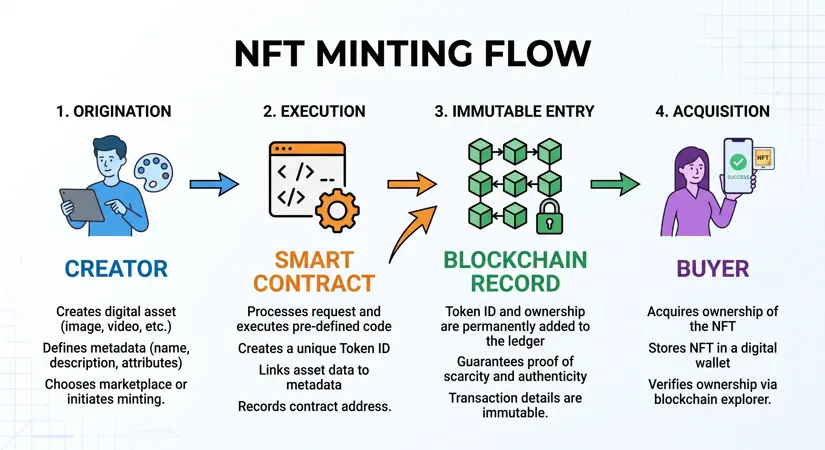
The blockchain network provides unique minting services where creators establish NFTs that ensure complete ownership rights. Every NFT carries its unique identification code and metadata, differentiating it from all other digital tokens. The blockchain saves this information to enable transparent and impossible-to-change record-keeping.
Purchasing an NFT grants you ownership of digital assets through the acquired token, available on blockchain technology. The blockchain preserves ownership data, creating an immutable digital record accessible by consensus.
The Rise of NFTs
The widespread popularity of NFTs stems from their feature of documenting asset ownership and authenticity. Digital art requires proof of ownership through NFTs because copying and sharing duplicate artwork frequently happens in digital spaces. Owning an NFT grants ownership evidence for the original digital asset and other copies found throughout the web.
According to research, the NFT market worldwide has demonstrated explosive expansion because its 2024 market value reached $193.84 billion, and experts predict it will achieve $820.6 billion by 2035. The demand for digital art, collectible market forces, and institutional integration in different industries make up the basis for NFT market expansion.
Creating Your NFT
A straightforward description of minting NFTs follows these steps:
- Determine the blockchain platform through which you want to create your NFT. The most recognized blockchain for NFT minting stands as Ethereum, though users can choose from multiple alternatives such as Solana or BNB Smart Chain.
- To store NFTs and cryptocurrencies safely, a digital wallet must be specified. MetaMask and Coinbase Wallet are the most frequently used cryptocurrency wallets.
- Users must pick an NFT marketplace through which they will both create and sell their tokens. The top marketplace choices for NFT creation are OpenSea, Rarible, and Mintable.
- The marketplace provides minting instructions for your digital asset, enabling you to create a new NFT through the platform. A smart contract allows you to publish an NFT by adding blockchain records of its details.
- After minting your NFT, you should list it for sale on the marketplace platform. Users can establish a particular sale price or conduct an auction.
NFT Applications Across Industries
The NFT model applies across different industries to serve multiple purposes.
- Art: Through NFTs, artists can tokenize their creative work for direct sale to collectors who no longer need to use galleries and auction houses to buy art.
- Gaming: In-game developers can express in-game assets as NFTs, which enables players to possess their digital property and exchange it between gaming networks.
- Real Estate: The Real Estate sector uses NFTs to simplify physical and digital property transactions, allowing owners to buy and sell more efficiently.
- Music: Music professionals leverage NFTs to offer their songs directly to their fans, establish additional income possibilities, and maintain stronger fan interactions.
- Sports: Digital versions of fashion and accessories can be used as NFTs for virtual wear or to prove the authenticity of luxury products.
📷 [Image placeholder, replace in editor: collage or grid representing NFT use cases: art, gaming, real estate, music, sports]
Benefits and Risks of NFTs
Benefits
- Increased market efficiency
- New investment opportunities
- Royalties for creators on secondary sales
- Unique ownership and authenticity verification
- Empowerment of artists and creators
Risks
- Market volatility
- Illiquidity in some markets
- Potential for fraud and intellectual property issues
- Lack of regulation
- Environmental concerns due to energy consumption
The Future of NFTs
The developing NFT ecosystem will lead to these future developments:
- Integration with Real-World Assets: Real-world assets will become NFTs at a rising rate, which will unite digital and physical domains.
- Metaverse and Gaming Expansion: Virtual gaming and worldwide digital economies expand through NFT integration in digital environments.
- Blockchain Diversity: Ethereum maintains its dominance, yet Solana, Cardano, and other blockchains demonstrate growing popularity in the NFT industry.
- Regulatory Developments: Market maturity will bring better regulation of NFTs, resolve intellectual property rights problems, and protect consumers.
Final Words
NFTs establish a groundbreaking method of recognizing digital ownership value. NFT technology enables artists to reach new heights through its capabilities, transforming gaming and real estate markets and creating new business opportunities for every industry. People should explore NFTs by being hopeful and careful because they bring advantages and disadvantages to the marketplace.
Individuals in all sectors who need to monetize digital artwork and video game assets or seek investment options will find NFTs to be the essential gateway into digital asset ownership and transaction methods of the future. The evolution of NFT technology demands continuous updates on upcoming space developments from people who want to explore this new digital marketplace.
Share the article:


